
County of Fortune Population and Culture Bonus Guide
Quick answer
Population in County of Fortune is the dial that controls how strong your culture bonuses are: the larger a culture's share of a region's population, the stronger its Traditional Product bonuses become there. According to Nepos Games' Steam post on reworked cultures from 2026-09-14, if a culture makes up more than 75% of a region's population, its Traditional Product bonuses in that region are multiplied by 2.5x. This page explains how that share system works, how Traditional Products feed into it, and how population levels gate progression through settlement levels and social classes.
| Demo level cap | Settlements can be levelled to 2, unlocking the Commoner social classDEMO FAQS (Steam, 2026-10-16) |
|---|---|
| Early Access level cap | No cap on settlement level; up to level 4 with Artisans and PatriciansDEMO FAQS (Steam, 2026-10-16) |
How County of Fortune population shares scale culture bonuses, with the 75% threshold, Traditional Product slots, and settlement level limits explained.

Table of Contents
Population in County of Fortune is the dial that controls how strong your culture bonuses are: the larger a culture's share of a region's population, the stronger its Traditional Product bonuses become there. According to Nepos Games' Steam post on reworked cultures from 2026-09-14, if a culture makes up more than 75% of a region's population, its Traditional Product bonuses in that region are multiplied by 2.5x. This page explains how that share system works, how Traditional Products feed into it, and how population levels gate progression through settlement levels and social classes.
How culture population share works
Settlers arrive from different cultures, and each region tracks how much of its population belongs to each one. Every culture has a set of Traditional Products — goods it is known for producing — and production buildings making those products get a production bonus. The size of that bonus scales with the culture's share of the regional population:
- A small share gives a small bonus. The base bonus from a Traditional Product is intentionally modest on its own.
- A dominant share gives a much bigger one. Above the 75% population share threshold, the multiplier reaches 2.5x, per the 2026-09-14 developer post.
- The share is measured per region, not county-wide, so the same culture can be dominant in one region and minor in another.
The real strength of the system comes from Culture Traits, which create synergies between pairs of Traditional Products — for example, one trait boosts the bonus when two Traditional Products are ingredients in the same recipe, and another links products from the start and end of the same production chain. Those trait bonuses stack on top of the population-scaled base bonus.
Choosing and changing Traditional Products
You decide which products become Traditional for each culture, with one restriction: the culture must have been the largest producer of that product during the last 12 in-game months. Each culture starts with 6 slots, and from Renown level 2 onwards, every new Renown level unlocks two additional slots.
Two practical points from the same developer post:
- Traditional Products can be changed later, so you are never locked into early choices.
- If you don't want to optimize every synergy, simply assigning products that matter to your economy still yields useful bonuses.
How to shift a culture's share
Population shares move as settlers arrive and as events convert residents. A first-hand playthrough of the demo by the YouTuber Flash Trauma shows an in-game event converting 10 residents to a different culture ("Elm, the Thornholders"), which nudged the regional culture balance directly. So beyond natural migration, story events can move residents between cultures, and the cultures overview window (reachable from the top bar) shows the current split — in that playthrough it listed cultures such as Eastfolders, Thornwalders, and Red Marches with their relative population sizes.
If you want a specific culture to hit the 75% threshold in a region, favor settlement choices, mayor hires, and event responses that favor that culture, then check the cultures overview to watch the share climb.
Population levels and progression limits
Population also gates progression through settlement levels. Fulfilling all food and equipment consumption needs for a settlement lets you click the "Level Up" button on its settlement screen, and each level raises the social classes living there:
| Version | Settlement level cap | Social classes |
|---|---|---|
| Demo (as of 2026-11-02) | Level 2 | Peasants, Commoners |
| Early Access (from Nov 5, 2026) | Level 4 | Peasants, Commoners, Artisans, Patricians |
Per the official demo FAQs on Steam (2026-10-16), Early Access removes the settlement level cap so you can level all the way to 4, unlocking over 40 new production buildings and 50 new products. Demo progress carries over to the full game, so population growth you build now is not wasted.
Levelling a settlement up also feeds back into the economy: at level 2 and above, supplying more equipment doesn't just unlock extra building slots, it also increases the maximum number of workers in those buildings, which supports further population and production growth.
How this fits together
A practical loop that combines both systems:
Pick a dominant culture per region
Decide early which culture you want to dominate each region, since the 75% share threshold is where the 2.5x bonus kicks in.Assign Traditional Products that match local industry
Make the culture Traditional in products the region actually produces at scale — this satisfies the largest-producer rule and targets the bonuses where output is highest.Level settlements to grow population
Fulfill food and equipment needs, click Level Up, and use the extra workers and building slots to expand production of those Traditional Products.Chase synergies, not just single products
Once traits are visible, pair Traditional Products that share recipes or production chains to multiply the effect.
Next steps
- The County of Fortune guide hub covers the broader systems — mayors, noble houses, and regions — that interact with culture bonuses.
- Levelling settlements is the population engine behind culture growth, so see how to level up a region for the needs-fulfilment workflow in detail.
- Trading surplus products between regions supports the production scale that Traditional Product bonuses amplify; the trading guide walks through markets and raft ports.
FAQ
What does population do in County of Fortune?
Population determines each culture's share of a region, and that share scales the strength of the culture's Traditional Product bonuses. Above 75% regional population share, a culture's bonuses there are multiplied by 2.5x, per the developer's 2026-09-14 Steam post. Population also progresses through settlement levels, unlocking social classes like Commoners, Artisans, and Patricians.
How many Traditional Product slots does each culture have?
Each culture starts with 6 slots. From Renown level 2 onwards, every new Renown level unlocks two additional slots. You choose the products, provided the culture was the largest producer of each one during the last 12 in-game months, and you can change them later.
Is there a settlement level cap?
As of 2026-11-02, the demo caps settlements at level 2 with the Commoner social class, while the Early Access version launching November 5, 2026 has no cap and allows levelling to 4, per the official demo FAQs on Steam. You can also level a settlement down to level another up.
Can I change a culture's Traditional Products after assigning them?
Yes. The developer confirmed that Traditional Products can be changed later, so you are not permanently locked into your original choices — though any new assignment still requires the culture to have been the largest producer of that product in the last 12 months.
Page checked on 2026-11-02 against Nepos Games' official Steam materials: the County of Fortune store page, the Traditional Products and Reworked Cultures announcement (2026-09-14, source of the 2.5x threshold and slot rules), the DEMO FAQS post (2026-10-16, source of level caps), and first-hand demo footage from Flash Trauma's gameplay video (culture overview and resident conversion event). The exact bonus scaling curve below the 75% threshold is not stated in any material and remains unconfirmed.
Related guides for this game
County of Fortune Guides
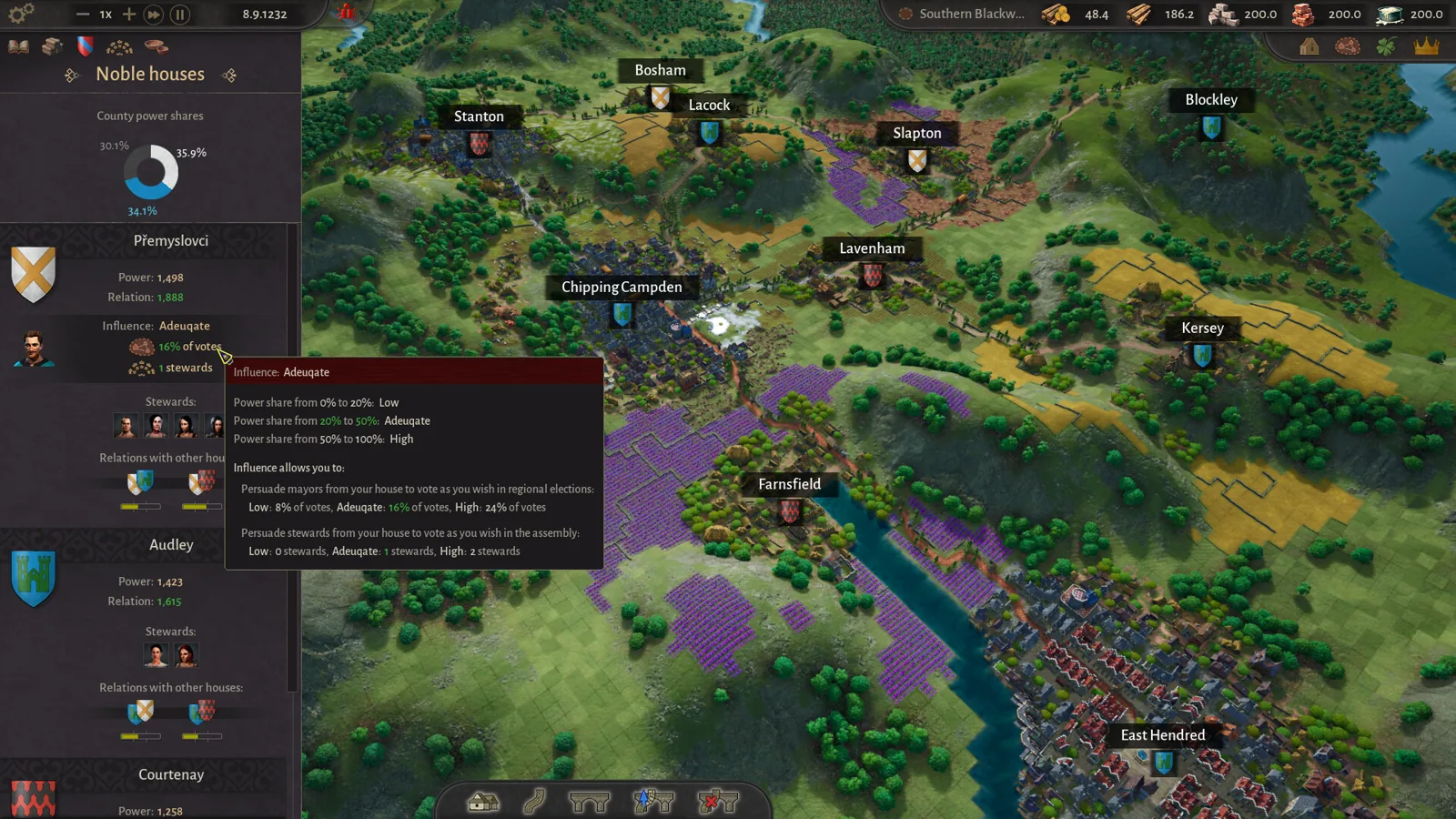
County of Fortune Alburn iron mine and Foundry Guide
Build a County of Fortune Alburn iron mine, link roads, appoint a mayor, and ship ore into a level 2 foundry to smelt metal bars for downstream workshops.
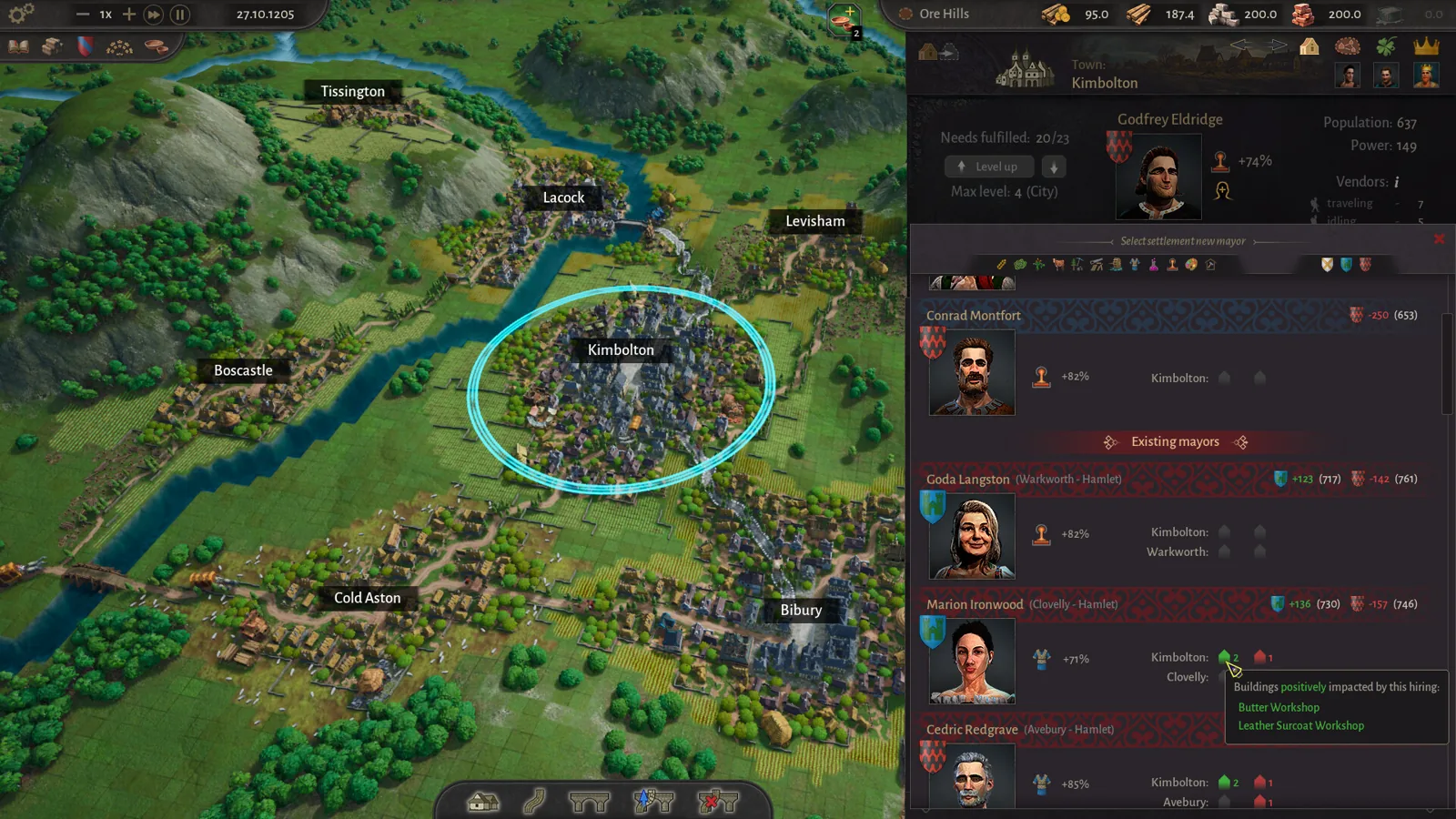
County of Fortune Assembly Votes and Privileges Guide
Learn how the County of Fortune assembly works, from house proposals and steward votes to regional privilege effects, corruption risks and eligibility.
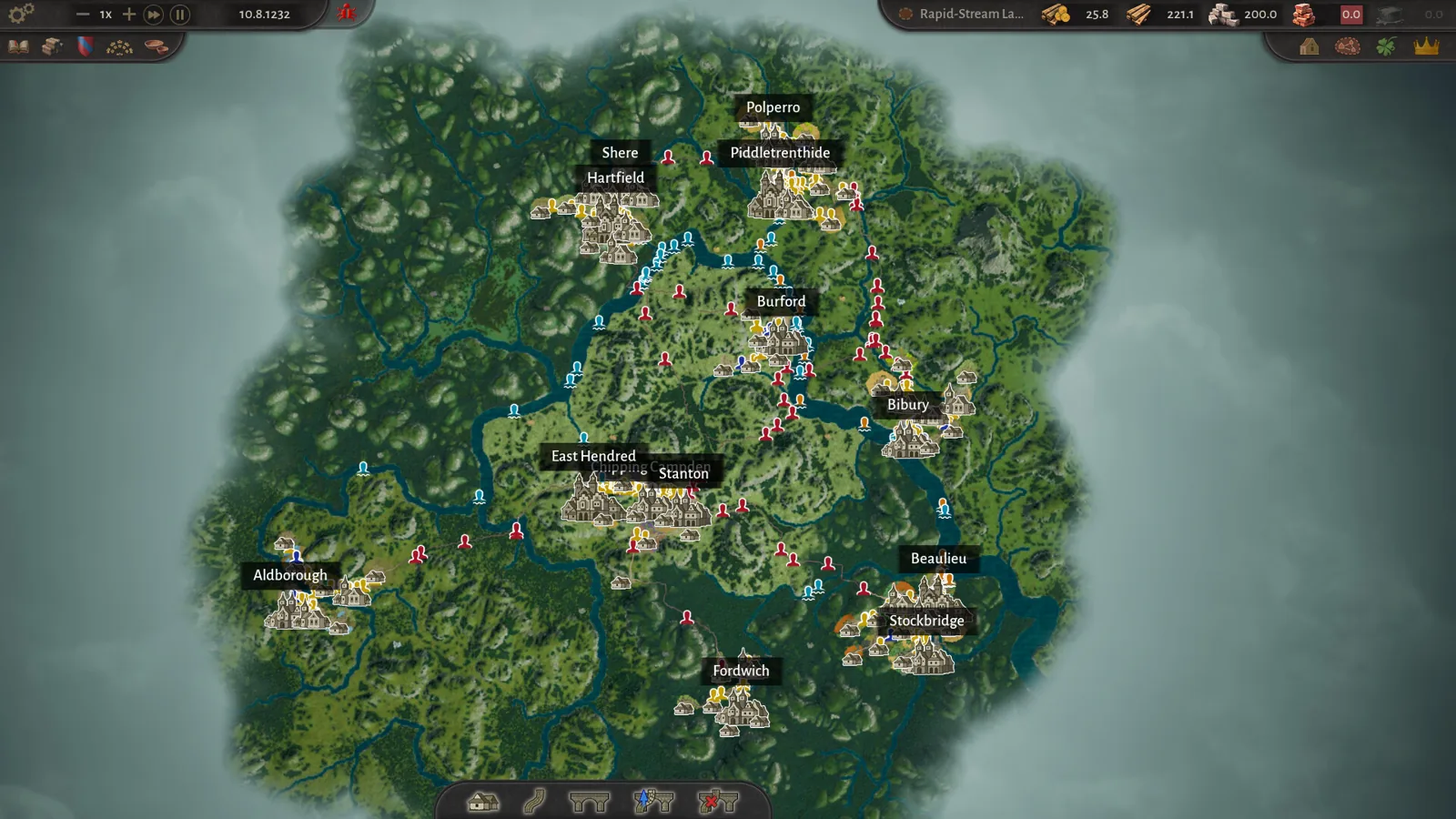
County of Fortune chestnut oil mayor and chain guide
County of Fortune chestnut oil mayor picks and the chain: grow chestnuts, press oil in a level 3 town, then serve beef on chestnut oil to your Artisans.
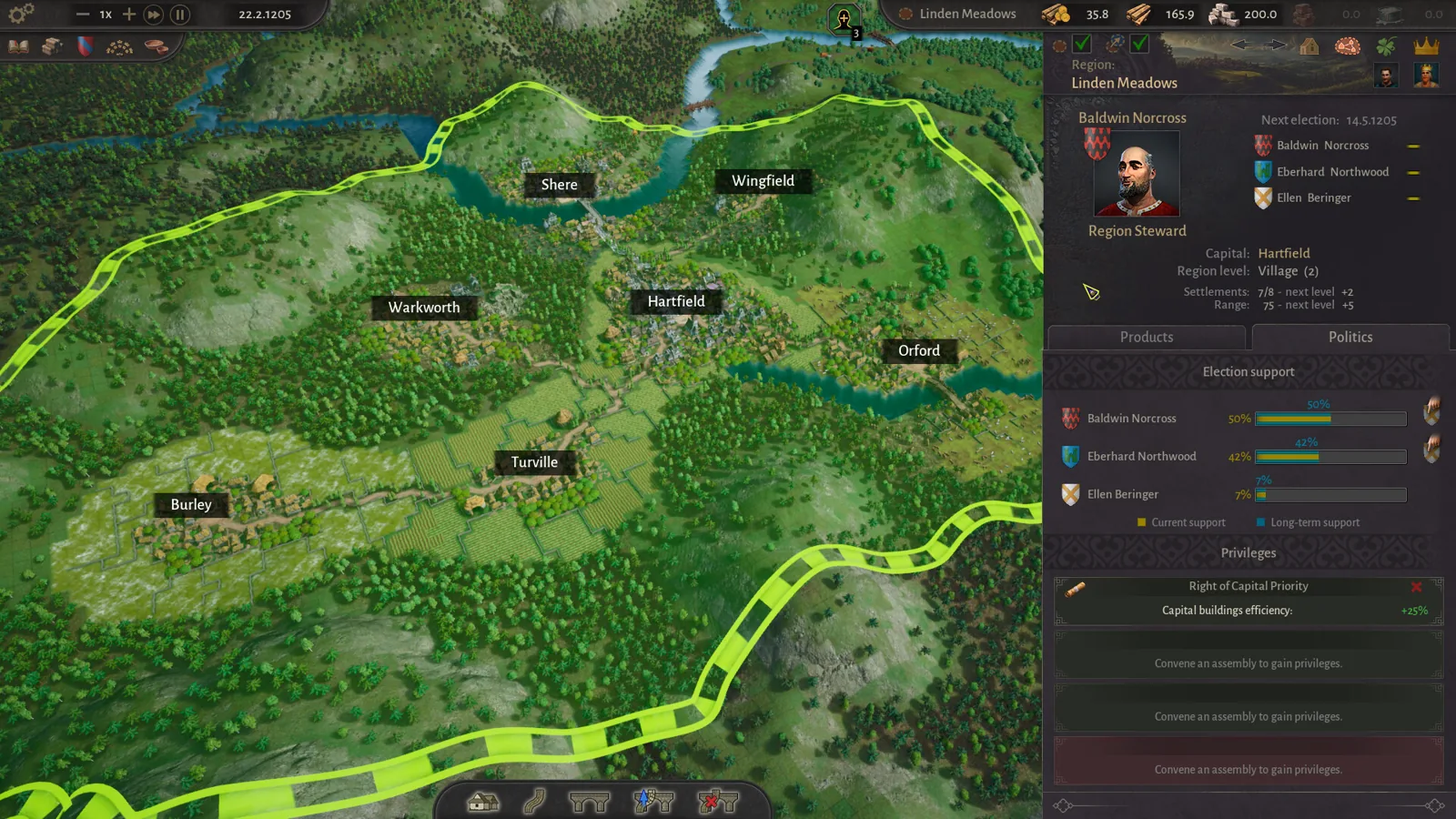
County of Fortune Trade Routes: Land and River Setup Guide
County of Fortune trade routes explained: level up settlements, build markets and raft ports, connect roads and rivers, and move goods between regions.
County of Fortune Release Details
County of Fortune roadmap: Early Access timing and price
County of Fortune roadmap answers when Early Access starts, how long it may run, when full release could land, and if the price may rise after 1.0 launch.
County of Fortune Gameplay & Media
County of Fortune gameplay: County Building Loop Guide
See how County of Fortune gameplay works: found settlements on resources, assign mayors, connect by road, set recipes, level up, and unlock new regions.